


BODY CLOCKS
Contents – Body Clocks
- Introduction: Why EscapeMed is a Different Approach – Longevity for Everyone
- Types of Dietary Supplements on the Market and EscapeMed’s Position
- What Are Body Clocks (Internal Clocks)
- Chronobiology – The Science of Internal Rhythms
- Main Biological Rhythms (Circadian, Ultradian, Infradian, Lunar, Annual)
- Daily Rhythm (Circadian Clock)
- Internal Clocks as the Body’s Orchestra
- Organs and Systems – Each Has Its Own Clock
- Longevity Clock – The Aging Clock
- Female and Male Hormonal Cycles
- Skin, Hair, Nails, and Cellular Cycles
- Chronotypes – Morning, Evening, Intermediate
- Social Jetlag – The Epidemic of Modern Times
- Zeitgebers – The Body’s Time Cues
- Catalysts and Lifestyle as Synchronizers
- Signs You Are Out of Rhythm
- EscapeMed Philosophy and Approach
- Our Slogan: Fewer Products, More Meaning
- EscapeMed as an Urban Substitute for Natural Signals
- Conclusion and the Core of EscapeMed
1. Introduction: Why EscapeMed is a Different Approach – Longevity for Everyone
Our body has an internal clock. When it is aligned, you have more energy, sleep better, and regenerate faster. When rhythms are disrupted, the result is fatigue, poor sleep, accelerated aging, and hormonal imbalance.
A metaphor that everyone instantly understands: the body is an orchestra. In the brain, we have the main clock (the conductor), and in the organs, peripheral clocks (the musicians): liver, skin, gut, heart, muscles… When they play together, the result is harmony: more energy, better sleep, healthier skin, and greater emotional stability. When they fall out of sync, noise arises: fatigue, cravings, sleep disturbances, hormonal disruption, faster skin aging, and more.
EscapeMed supports natural rhythms with targeted formulations and protocols at the right time of day – with fewer products and greater meaning. EscapeMed is more than dietary supplements – it is a philosophy of synchronizing the body’s rhythms: from daily day–night cycles, monthly hormonal rhythms, and skin and cellular regeneration cycles, to the long-term “longevity clock” (the biological clock of aging).
Our foundation is chronobiology – the science of the body’s internal clocks – and every formulation is designed to respect the temporal dynamics of physiology.
2. Types of Dietary Supplements on the Market and EscapeMed’s Position
If we look at the market, dietary supplements can be divided into three groups:
- Generic – vitamins, minerals, collagens...
- Focused – products for a single problem: sleep, joints, immune system, digestion…, where the focus is on one function.
- Scientific – formulations that refer to research and new active compounds (e.g., NMN, spermidine...).
EscapeMed, however, opens a fourth category: products designed to support the body’s natural rhythms, reinforcing natural Zeitgebers and acting as supportive catalysts (explained later on).
Our philosophy is based on chronobiology – the science of the body’s internal clocks. It is not only about what we consume, but also when. Time becomes just as important as effect. That is why our supplements are not random capsules but synchronized signals that help the body return to harmony.
EscapeMed is more than dietary supplements. It is a philosophy that unites the body’s different internal rhythms. This holistic approach is unique in the world of supplements. True, there are day–night multivitamins or formulations for hormonal balance, but no brand has ever connected this into a clear philosophy of alignment across all of the body’s internal clocks.
EscapeMed is the first brand to translate this vision into a practical system – the Escape Protocol – Escape Body Clock Method™. That is why we can confidently say: EscapeMed is not just another supplement brand. EscapeMed is a philosophy of rhythms. A philosophy where when is just as important as what. A philosophy that restores rhythm, energy, and balance to the body.
This means supplements are no longer about random capsule-taking, but become synchronized signals that guide the body back to harmony.
3. What Are Body Clocks (Internal Clocks)
Our body follows an internal clock – the body clock – every day, coordinating processes of rest, repair, and activity. This natural rhythm is as old as humanity itself and determines when we sleep, when we have the most energy, and when regeneration processes are triggered. Without the internal clock, our organism would be lost, as organs and cells would function each on their own. It is important to understand that the body does not have just one clock.
The main clock is located in the brain, in the suprachiasmatic nucleus (SCN) of the hypothalamus. It acts as a conductor, guided by daylight, synchronizing day and night.
In addition, there are peripheral clocks present in virtually all organs and tissues – in the liver, heart, digestive system, skin, muscles, and even in every single cell. These “time mechanisms” ensure that each system works according to its optimal schedule.
When these internal clocks are aligned, the body functions like an orchestra in perfect harmony: digestion flows smoothly, regeneration is effective, hormones work in balance, and energy remains stable. But if the clocks fall out of sync – due to stress, irregular sleep schedules, poor nutrition, night shifts, or excessive exposure to artificial light – imbalance occurs. We feel the consequences as fatigue, slower regeneration, hormonal imbalance, and accelerated aging.
How does the internal clock work in practice?
- Evening (around 10:00 p.m.) – the body switches into relaxation mode. Substances are naturally released, signaling that it is time for rest and recovery.
- Night (10:00 p.m. – 6:00 a.m.) – key processes of repair and rebalancing take place in different body systems. Quality sleep and the right environment – darkness, quiet, lower temperature – allow the body to function most efficiently during this time.
- Morning (around 6:00–8:00 a.m.) – the internal clock switches into activation mode. Mechanisms that support building, growth, and energy are awakened. At this time, fibroblast activity naturally increases – the cells that produce collagen and ensure the firmness and renewal of skin and connective tissues.
Our body, therefore, functions according to finely tuned clocks. And when these clocks lose their synchronicity, the first signs appear – from poor sleep and fluctuating energy to changes in the skin. EscapeMed builds its products precisely on this scientific foundation: to help the body realign with its natural rhythms.
EscapeMed communicates these principles purely for educational purposes and without health claims – temporal alignment is the foundation, while the products serve as support for these natural processes.
4. Chronobiology – The Science of Internal Rhythms
Chronobiology is the science that studies how our body functions in rhythms. These are natural cycles that influence everything – from sleep, hormones, digestion, and the immune system to cellular repair and tissue growth. These processes are not random but time-coordinated: every organ, every cell, and even our mitochondria follow their own internal schedule.
The functioning of these rhythms is influenced by external signals called Zeitgebers. The strongest among them are light and darkness, followed by meal timing, movement, temperature, and social rhythms. These signals tell the body when it is time to rest, to be active, to repair, and to build.
Understanding chronobiology gives us something essential: the ability to help the body function at the right time. When we support natural rhythms, the body makes far more efficient use of sleep, food, exercise, and supplemental signals. This is precisely why EscapeMed is built on chronobiology – because what matters is not only what but also when.
5. Main Biological Rhythms (Circadian, Ultradian, Infradian, Lunar, Annual)
Our body functions in different time cycles that complement one another. Each of these rhythms plays its own role in how we feel, regenerate, and age.
- Circadian rhythm (24-hour cycle):
This is our internal day–night clock. It regulates sleep and wakefulness, hormone secretion, body temperature, appetite, and energy. When the circadian rhythm is stable, we wake up refreshed in the morning, have steady energy throughout the day, and the body naturally prepares for rest in the evening. - Ultradian rhythms (shorter than 24 hours):
In addition to the 24-hour rhythm, there are also shorter internal cycles. The best-known are the 90-minute sleep cycles (alternating between NREM and REM phases) as well as cycles of focus and concentration during the day. The body and brain therefore operate in waves of activity and rest, which influences productivity and regeneration. - Infradian rhythms (longer than 24 hours):
These are rhythms that last longer than a day. The most obvious example is the female menstrual cycle, which affects hormonal balance, energy, digestion, and even sleep quality. Infradian rhythms can also be observed in seasonal changes – the body functions differently in winter than it does in summer. - Lunar and annual rhythms:
The body also responds to longer cycles connected to the moon and the seasons. Differences in day length, light exposure, and seasonal availability of food have always shaped our internal rhythm.
When all these rhythms align, we experience a complex yet finely tuned system that sustains life. When the cycles are in harmony, we feel energetic and balanced. But when they are disrupted, the body quickly shows signs of imbalance – from sleep disturbances and lack of energy to slower regeneration and delayed skin renewal.
6. Daily Rhythm (Circadian Rhythm)
The most basic and at the same time the strongest internal clock in our body is the circadian rhythm – a 24-hour cycle that synchronizes day and night. This rhythm determines when we feel awake and full of energy, when sleepiness naturally sets in, when it is time for regeneration, and when it is time for building.
The main clock is located in the brain, in a small region called the suprachiasmatic nucleus (SCN). This part acts as the conductor: it receives signals from the environment (primarily light) and coordinates our internal processes.
Two key hormonal signals of this rhythm are:
- Cortisol – produced in the adrenal gland. Its secretion is stimulated by the SCN via the hormonal axis, reaching its peak early in the morning (the so-called cortisol awakening response). It signals to the body that it is time to wake up, activate, generate energy, and consume fuel. Throughout the day, cortisol naturally declines, allowing the transition into evening relaxation.
- Melatonin – produced in the pineal gland under the influence of signals from the SCN. Its secretion increases as it gets dark and peaks at night. Melatonin is a key hormonal signal that tells the body it is time for sleep and regeneration – contributing to evening relaxation and the switch into nighttime mode, making it easier for the body to fall asleep.
In addition to this main clock, all organs also have their own peripheral clocks. The liver detoxifies and restores enzyme stores at night. The skin protects against external influences during the day and regenerates at night. Muscles are most prepared for intensive exercise in the late afternoon, while digestion is most active during the day.
When the circadian rhythm is aligned, the body functions in harmony: we wake up refreshed in the morning, energy remains stable throughout the day, and natural tiredness arrives in the evening. But when this rhythm is disrupted – due to late meals, night work, too much blue light exposure in the evening, or irregular sleep – the body loses its natural flow. The result is poorer sleep, less energy, slower regeneration, and accelerated aging.
7. Internal Clocks as the Body’s Orchestra
Our body is governed by a complex network of internal clocks. The main clock in the brain – the suprachiasmatic nucleus (SCN) – regulates the basic day–night cycle, while the liver, digestive system, heart, skin, muscles, and even individual cells each follow their own rhythms.
A key role in this coordination is played by the autonomic nervous system and hormonal signals. The autonomic nervous system acts as the operational interface:
- during the day, the sympathetic branch predominates, stimulating activity, energy expenditure, and alertness,
- at night, the parasympathetic branch takes over, allowing relaxation, slowing the heart rate, and activating regenerative processes.
The two most important hormonal “time signals” are:
- Cortisol – a hormone of the adrenal gland, acting as the “morning conductor.” Its rhythm sets the body’s transition into activity: influencing blood pressure, blood glucose, metabolism, and readiness to act. Cortisol naturally peaks early in the morning (the cortisol awakening response) and then declines throughout the day. If the morning peak is too low, feelings of exhaustion and “burnout” often occur. If cortisol remains chronically elevated, the body is kept in a stress mode, which makes nighttime repair more difficult.
- Melatonin – a hormone produced in the pineal gland, triggered by darkness and the absence of light. It signals the body to switch into night mode: slowing metabolism, lowering body temperature, and enabling entry into deep sleep phases where the most intensive regeneration takes place. If melatonin is not sufficiently released in the evening (for example, due to blue light from screens), falling asleep becomes more difficult, sleep remains shallow, and recovery is weakened. If the melatonin rhythm shifts (such as with night work), the body loses its clear distinction between day and night.
When the rhythms of cortisol and melatonin are aligned, the body can smoothly shift between activation and restoration – between the “day gear” and the “night gear.” If desynchronization occurs (due to stress, night shifts, irregular meals, artificial light, etc.), the internal clocks lose their coherence. The result is the sensation of being “tired and wired” at the same time, which in the long run undermines sleep, regeneration, and resilience.
The EscapeMed approach is based precisely on this: providing the right signals at the right time to help the body reestablish this fine mechanism – so that the internal clocks once again function like an orchestra in harmony.
8. Organs and Systems – Each Has Its Own Clock
Research in chronobiology shows that internal clocks are not limited to the brain but are present in almost every organ and tissue. The liver, heart, digestive system, skin, and muscles each have their own biological rhythms that determine when a given organ is most active.
- Liver: activates metabolic pathways at night and processes nutrients after meals during the day.
- Cardiovascular system: sympathetic nervous system activity naturally increases in the morning, influencing blood pressure and heart rate.
- Skin: at night, it activates repair processes, including collagen synthesis. Fibroblast activity for collagen production peaks in the morning hours, making this part of the day critical for supporting skin and connective tissue. During the day, the skin functions mainly as a protective barrier against external influences.
- Digestive system: most efficient during the day, while at night it transitions into a phase of rest and repair.
When these rhythms are synchronized, organs function optimally. If circadian desynchronization occurs, the organs are no longer aligned with one another, reducing the overall efficiency of the body’s systems.
9. Longevity Clock – The Aging Clock
In addition to the daily rhythms that repeat every 24 hours, our body also has biological clocks of aging. These clocks measure how quickly our organs and tissues age – and not all of them age at the same rate. The liver, heart, brain, skin, and muscles can each have a different “biological age,” which does not necessarily match chronological age.
In recent years, scientists have developed so-called epigenetic clocks – methods that measure biological age by analyzing chemical marks (methylation) on DNA. These epigenetic changes act like a “time log,” revealing how quickly or slowly the body is aging at the cellular level.
EscapeMed combines support for short-term rhythms (circadian, hormonal, cellular cycles) with an impact on long-term rhythms of aging. Our goal is not only to improve daily energy, sleep, or regeneration, but also to contribute to slowing down the aging process and maintaining vitality in the long run.
10. Female and Male Hormonal Cycles
The female hormonal cycle lasts on average 28 days. In the first half of the cycle, estrogen predominates, stimulating growth, energy, good mood, and skin vitality. In the second half, progesterone takes the lead, preparing the body for relaxation and regeneration. This is why women experience shifts in energy, mood, sleep quality, and even skin structure at different points in the cycle.
The male hormonal cycle is shorter – expressed mainly in the daily rhythm of testosterone. Testosterone levels are highest in the morning, supporting strength, focus, and physical performance. They gradually decline throughout the day, reaching their lowest point in the evening.
Understanding these hormonal rhythms is essential, as they influence when we have the most energy, when the body is most prepared for physical exertion, and when it needs greater support for recovery. EscapeMed incorporates this very dimension into its products – ensuring that supplements align not only with daily rhythms but also with monthly and hormonal rhythms of the body.
11. Skin, Hair, Nails, and Cellular Cycles
Our body is in constant renewal, but each tissue follows its own schedule. These natural cycles determine how quickly changes become visible in the skin, hair, nails, and internal tissues.
- Skin: the epidermis completely renews itself in about 28–30 days on average. This is the “monthly skin cycle,” which defines when the first results of skincare or supplements become visible.
- Collagen and connective tissues: fibroblasts follow the circadian rhythm – repair is activated at night, while collagen synthesis peaks in the morning. The renewal of collagen fibers and the connective framework is slower than that of the epidermis and can take from 2–3 months up to several years, as collagen structures are deeper and more stable.
- Intestinal cells: regenerate the fastest – most live only 3–5 days, which is why the digestive system quickly responds to changes.
- Red blood cells: circulate in the body for about 120 days (≈4 months) before being replaced.
- Bone cells: regenerate very slowly – complete renewal of bone tissue can take 7–10 years.
- Nails: grow more slowly – around 2–3 mm per month on the hands and even slower on the feet.
- Hair grows on average about 1–1.5 cm per month (around 0.3–0.5 mm per day). This means roughly 12–18 cm per year. Their growth cycle is long – the anagen (growth) phase can last 2–6 years, which is why hair can reach considerable length.
- Body hair grows more slowly and has a shorter growth phase. It usually grows about 0.3 cm (3 mm) per month, with the anagen phase lasting only a few weeks to months. That is why body hair is much shorter than scalp hair.
- Eyelashes and eyebrows grow even more slowly. They grow about 0.1–0.15 mm per day, or roughly 1 cm over 5–6 months. Their anagen phase lasts only 1–2 months, after which they enter a resting phase and fall out before growing longer.
Each tissue therefore has its own timing. Some regenerate very quickly (intestines, skin), others at a medium pace (blood cells, nails), and some extremely slowly (collagen, bones). The EscapeMed approach respects these natural rhythms and supports renewal where it matters most – in the skin, hair, nails, and the collagen framework, which form the foundation of youthful appearance and vitality.
12. Chronotypes – Morning, Evening, Intermediate
A chronotype describes when an individual has the most energy and when they naturally feel most active. In scientific literature, three main groups are distinguished:
- Morning type: naturally wake up early, have the most energy in the morning hours, and tire quickly in the evening.
- Evening type: active and creative mainly in the late evening hours, but have more difficulty adjusting to early rising.
- Intermediate type: the majority of people fall into this group – they have stable energy throughout the day and can adapt to both earlier and later schedules.
When a person lives in alignment with their chronotype, the body functions more harmoniously. But if social schedules force them in the opposite direction, misalignment occurs, putting strain on hormones, sleep, and recovery.
13. Social Jetlag – The Epidemic of Modern Times
We are convinced that many have not yet heard of the term social jetlag. This is a term scientists use to describe the mismatch between our biological clock (natural chronotype) and the social clock, which is dictated by obligations and the environment.
Every person has their own chronotype – some are more morning-oriented, others evening-oriented. The problem arises when the social schedule (work, school, social commitments) does not align with this natural chronotype.
Example: someone is naturally an evening type and feels best going to sleep around midnight and waking up at 8 a.m. But because they must wake up every day at 6 a.m., they experience chronic sleep deprivation during the week. On weekends, they try to compensate for this debt by sleeping until 10 a.m. The body thus shifts between two time regimes – the natural one and the imposed one – creating a sensation similar to traveling across several time zones.
An even stronger example of social jetlag is night shifts. When a person works at night and sleeps during the day, the internal clocks are in constant conflict with the external signals of day and night. This not only disrupts melatonin secretion but also shifts cortisol release, which normally peaks in the morning. When cortisol is secreted at the wrong time, the balance of the autonomic nervous system – sympathetic and parasympathetic branches – is disrupted, which in the long run results in greater fatigue, reduced regeneration, and hormonal imbalance.
In social jetlag, the nighttime melatonin peak and the morning cortisol peak are often shifted in time, disrupting the balance of the autonomic nervous system. The result is poorer sleep quality, fluctuating energy, and slower recovery.
The consequences of social jetlag can include fatigue, energy swings, hormonal instability, and slower regeneration. For this reason, experts describe this phenomenon as an epidemic of modern times, since it affects the majority of people living in fast-paced, urban environments.
The EscapeMed approach helps reduce the effects of social jetlag by providing the body with clear signals at the right time – through sleep, light, movement, and carefully designed supplements that support internal rhythms.
14. Zeitgebers – The Body’s Time Cues
Our body orients itself every day by external signals that help keep the internal clocks synchronized. In scientific literature, these signals are called Zeitgebers – a word originating from German, literally meaning “time giver” (zeit = time, geber = giver). Although it is a foreign term, Zeitgeber is used worldwide as a standard concept in chronobiology, as it precisely describes how the environment “sets” our biological rhythm.
The most important Zeitgebers are:
- Light and darkness: the primary regulators of the circadian rhythm. Morning light activates wakefulness, while darkness triggers melatonin release and prepares the body for sleep.
- Food: the timing of meals is a strong signal for the digestive system, liver, and metabolism. Eating in line with the daily rhythm makes digestion more efficient.
- Movement: physical activity is an important Zeitgeber for muscles, the cardiovascular system, and metabolism.
- Temperature: both environmental and body temperature signal when it is time for activity and when for rest.
- Social rhythm: schedules of work, school, and social interactions are also cues that align our internal clock with the environment.
When Zeitgebers are aligned, the body functions harmoniously. But if the signals are irregular – for example, too much artificial light at night or late meals – the internal clocks are disrupted. This is called circadian desynchronization.
EscapeMed supplements are designed to support these natural signals. They do not replace light, food, or movement but complement them as supportive elements, helping the body recognize the right moment for regeneration, activation, or renewal.
15. Catalysts and Lifestyle as Synchronizers
The word catalyst comes from chemistry and biology. It means a substance or factor that accelerates a natural process without creating it or changing its essence. Without a catalyst, the process would run more slowly or less efficiently – with a catalyst, it happens faster and at the right time.
Our body already has all the processes it needs for functioning, growth, and repair built in. Nutritional supplements do not create anything new – but they can act as supportive catalysts, helping processes unfold more effectively and at the right time.
At the same time, the main mechanism of synchronization is our lifestyle. Quality sleep, regular movement, balanced nutrition, and proper exposure to light are the strongest natural synchronizers of the internal clocks. When these foundations are in place, the body can more easily stay in rhythm and maintain stability.
EscapeMed combines both:
- lifestyle as the foundation, without which long-term synchronization is not possible,
- supplements as supportive catalysts that complement natural signals and help the body recognize the right moment for rest, activation, or repair.
In this way, EscapeMed does not offer just individual capsules but a holistic approach, where the science of internal clocks is translated into everyday practice.
16. Signs You Are Out of Rhythm
Our body constantly sends us signals about how well the internal clocks are aligned. When rhythms are stable, we feel rested, full of energy, the skin is radiant, the hair strong, and the mood balanced.
But when circadian desynchronization occurs – when the internal clocks are no longer in sync – the body shows it quickly. Often, the balance of the autonomic nervous system (sympathetic/parasympathetic branches) is also disturbed, along with the natural rhythm of cortisol and melatonin. This leads to characteristic symptoms such as fatigue, disrupted sleep, and weaker regeneration.
The most common signs that you are out of rhythm include:
- you sleep long enough (even 8 hours) but still wake up tired, because the nighttime switch into deeper sleep phases is not optimal and growth hormone release does not occur properly,
- you experience a pronounced afternoon “energy dip” or so-called afternoon crash. For many, this shows up as a reduced morning cortisol peak combined with elevated evening cortisol and insufficient melatonin at night – a timing mismatch that worsens sleep quality and daytime energy,
- your skin loses its glow and regenerates more poorly,
- your hair starts thinning or falling out,
- hormonal fluctuations and unpredictable mood changes appear.
These are not just cosmetic or temporary symptoms – they are signs of disrupted internal clocks. In the long run, misalignment can also affect metabolism, including insulin balance.
The EscapeMed approach is based precisely on this: helping the body to reestablish balance between internal clocks, hormonal signals (from melatonin and cortisol to sex hormones and the thyroid), the autonomic nervous system, and metabolism.
17. EscapeMed Philosophy and Approach
The EscapeMed philosophy is simple: fewer products, more meaning. We don’t believe in dozens of capsules without logic, but in carefully chosen signals that align with the body’s natural rhythms.
Each product is designed as a signal:
- Super Sleep – the evening signal that supports relaxation and creates the conditions for quality nighttime rest.
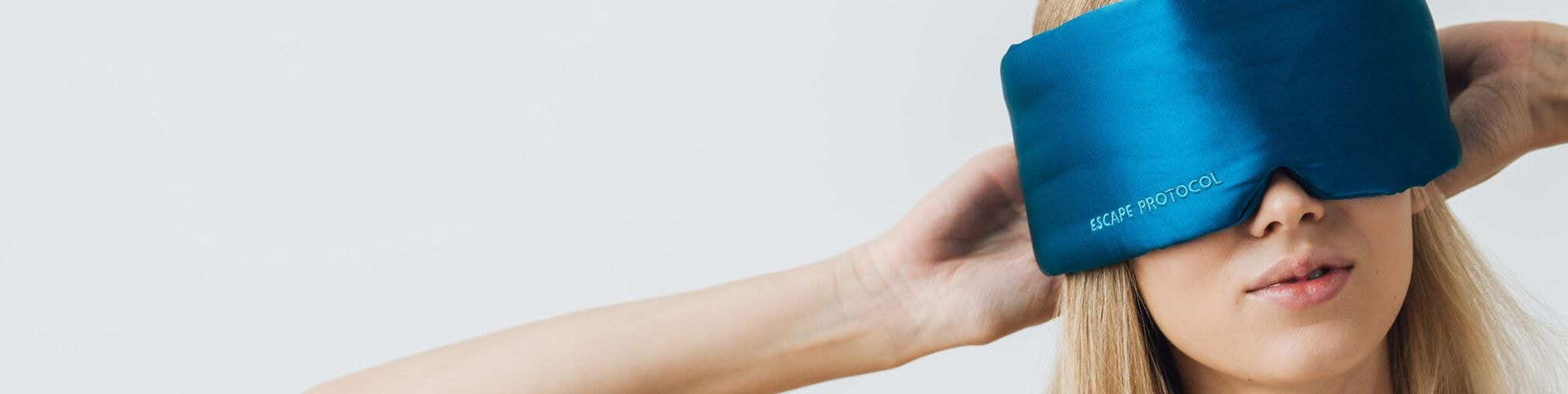
- Silk Sleep Mask – darkness as a natural Zeitgeber; it stimulates natural melatonin release while mechanically protecting the skin and hair during sleep.
- Skin Renewal Complex – morning support for fibroblasts and collagen production, at the time when the skin is naturally most prepared for renewal.
Together, these products form the foundation of the Escape Protocol – a system that connects the science of internal clocks with practical daily rituals.
Why did we start with these three products?
Collagen is the most abundant protein in the human body – accounting for about 30% of all proteins and around 5–6% of total body mass. It forms the structural framework of skin, bones, muscles, tendons, ligaments, and cartilage. The skin, meanwhile, is our largest organ, directly reflecting internal balance and regeneration.
That is why the first EscapeMed products were designed around sleep and skin – two of the most universal processes where the body’s internal rhythm is most clearly expressed.
These three initial signals – evening (Super Sleep), night (Silk Sleep Mask), and morning (Skin Renewal Complex) – together create the basic framework: evening – night – morning. This is the logical starting point, as it connects key biological processes: melatonin, cortisol, fibroblasts, and collagen.
EscapeMed is not just a product line. Our goal is also to promote a lifestyle aligned with the body’s rhythm: regular sleep, movement, balanced nutrition, and light exposure. When combined with supplements, this creates true synchrony – helping the body return to its natural rhythm.
Currently, we offer three products that represent the core of the EscapeMed approach. Even if someone is interested in only one product, it is important to understand that each one functions as a signal. The greatest effect, however, comes when signals complement one another and are used at the right time of day.
Other products are already in development and will gradually expand the Escape Protocol. All are guided by the same philosophy: simplicity, temporal alignment, and support of natural biological rhythms.
Additional explanation regarding Super Sleep: this is a dietary supplement. It is not a drug, not a sleeping pill, and not intended for the treatment of insomnia or other sleep disorders. The field of “sleep-related” health claims is strictly regulated, so Super Sleep is not presented as a product that “induces sleep” or “treats insomnia.”
What Super Sleep is: a dietary supplement for an evening ritual, designed as a gentle supportive signal within chronobiology (“time cue”) and a supportive catalyst for the body’s natural evening relaxation processes that it already knows. Part of the Escape Protocol approach, where when matters as much as what.
What Super Sleep is not: Super Sleep is not a sleeping pill and not a drug; it is not intended for diagnosing, treating, or preventing disease and does not replace medical advice or sleep hygiene (light, routine, nutrition, movement).
Why the name “Super Sleep”? The name is a metaphor: quality nighttime rest is the natural foundation of the body’s regenerative processes (from skin renewal to systemic homeostasis). The product does not induce sleep – it acts as an evening signal within the Escape Protocol approach.
18. Our Slogan: Fewer Products, More Meaning
At EscapeMed, we believe that health and vitality do not require 50 different capsules a day. We need only a few key products – at the right time.
Less is more:
- more impact – because the body receives support when it needs it most,
- less stress – because supplements are not a burden but part of the natural rhythm,
- more alignment with rhythms – because each product integrates into the body’s biological clock.
EscapeMed is not just a line of supplements but a philosophy: Escape Body Clock Method™. Simplicity, temporal alignment, and synchrony with internal clocks – that is our approach.
For example: Classic sleeping pills often merely suppress symptoms and cause drowsiness.
EscapeMed does not force the body into artificial sleep – it supports natural rhythms and enables the body to restore itself in ways it already knows.
Fewer products, more meaning. More alignment with rhythm.
EscapeMed = Escape Body Clock Method™.
19. EscapeMed as an Urban Substitute for Natural Signals
In the so-called Blue Zones, people live long lives because they remain aligned every day with natural signals – light, movement, nutrition, and the rhythm of the day. We, however, live in environments of artificial light, stress, and irregular schedules, where the body loses its sense of natural rhythm. The result is chaos, which the body pays for with fatigue, weaker regeneration, and accelerated aging.
EscapeMed was created as an urban substitute for these signals. Each product – whether Super Sleep, Silk Mask, or Skin Renewal Complex – is designed to support natural Zeitgebers and serve as a supportive catalyst for bodily processes at the right time.
Our approach also respects natural hormonal rhythms – the morning rise of cortisol, the evening release of melatonin, and other hormonal signals that determine when the body is in activity mode and when in repair mode.
It is important to understand that this is not “just another sleep capsule” or “just a skincare product.” Each element is part of a broader philosophy – the Escape Body Clock Method™ – which unites natural rhythms, science, and everyday practice.
20. Conclusion and the Core of EscapeMed
The longevity lifestyle is not reserved for a select few – it is not something that happens only in elite clinics or among the top 1%. With a few thoughtful products and the right life rhythm, it is accessible to anyone at home.
EscapeMed is something new, different, and perhaps at first glance harder to grasp, because it represents an entirely different concept. But through the lens of nature, it becomes clear: the body always operates in rhythms. When we support these rhythms with the right signals, harmony is triggered – a harmony we can feel everywhere, from mood and energy to skin and appearance.
EscapeMed means:
- fewer products, more meaning,
- each product is a signal that integrates into the body at the right time,
- it’s not just about capsules or masks, but about a holistic system that restores the body to its natural rhythm.
EscapeMed = your compass back to the natural rhythm.
Eight Key Answers for Understanding EscapeMed
- What is the problem?
Modern life distances us from natural rhythms. Artificial light, stress, irregular meals, and night work disrupt the body’s internal clocks. The result is a sense of imbalance: fatigue despite sleep, afternoon energy crashes, hormonal fluctuations, dull skin, and loss of elasticity.
- How does the body work?
Our body is guided by an internal clock – the circadian rhythm. Two key hormones regulate it: cortisol (adrenal gland) – naturally peaks in the morning, promoting alertness and activation, then gradually declines throughout the day; and melatonin (pineal gland) – begins to rise in the evening when it gets dark, signaling the body that it is time to rest. These hormones work together with the autonomic nervous system: the sympathetic branch promotes activity, while the parasympathetic branch enables relaxation and recovery. When these processes are aligned, the body functions like an orchestra in harmony.
- What does EscapeMed offer?
EscapeMed is a system of signals, not just a collection of capsules. Our products are designed to support natural Zeitgebers and act as supportive catalysts, helping the body recognize the right moment for relaxation, rest, or repair. They create clearer habits through a simple framework: evening – night – morning that is easy to internalize.
- Why start with evening and skin?
Because sleep is the natural foundation of regeneration, and skin is our largest organ. Collagen is the body’s main structural protein, and together these elements represent the clearest entry point to restoring balance in the body’s rhythms.
- What Super Sleep is – and what it is not
Super Sleep IS: a dietary supplement, an evening ritual, and a calming signal; part of the Escape Protocol approach, where when is just as important as what.
Super Sleep IS NOT: a medicine, a sleeping pill, or intended to treat insomnia or other diseases. It does not replace a healthy lifestyle. The name Super Sleep is a metaphor: quality nighttime rest is the foundation of the body’s regenerative processes.
- How to start?
The foundation always comes first: a structured lifestyle.
Quality sleep, regular movement, balanced nutrition, and daily routine are the strongest natural synchronizers of our internal clocks. Without them, there is no long-term solution.
EscapeMed products are designed as support for these foundations – additional signals that help the body recognize the right time for calm, rest, and renewal:
- Super Sleep – the evening signal and ritual of relaxation,
- Silk Sleep Mask – creating the conditions of darkness for nighttime rest,
- Skin Renewal Complex – morning support for skin renewal and collagen framework.
Together, they create a simple structure: evening – night – morning.
- What do you gain?
- Daily structure: evening, night, and morning each have their own signal,
- Fewer capsules, more meaning: each product has a precise role,
- Rhythm support: products integrate into the body’s natural processes,
- A philosophy, not just products: EscapeMed = a system, not a pile of capsules.
- Why do we need this?
Because in urban environments, the body loses touch with natural signals. EscapeMed is a practical way to bring them back: evening for calm, night for rest, morning for renewal. The concept is different and may seem harder to grasp at first, but through the lens of nature, it is simple: the body always works in rhythms. And when we support those rhythms with the right signals, harmony is activated – felt everywhere, from energy and mood to skin and appearance.
EscapeMed does not promise miracles – but it does offer a clear, simple system of signals that help the body more easily recognize its natural rhythm. This is the first step toward more balance, less chaos, and a better feeling of well-being.
EscapeMed = your compass back to the natural rhythm.
Disclaimer: The content is for informational purposes only and does not replace medical advice. The products are not intended to diagnose, treat, or prevent any disease.